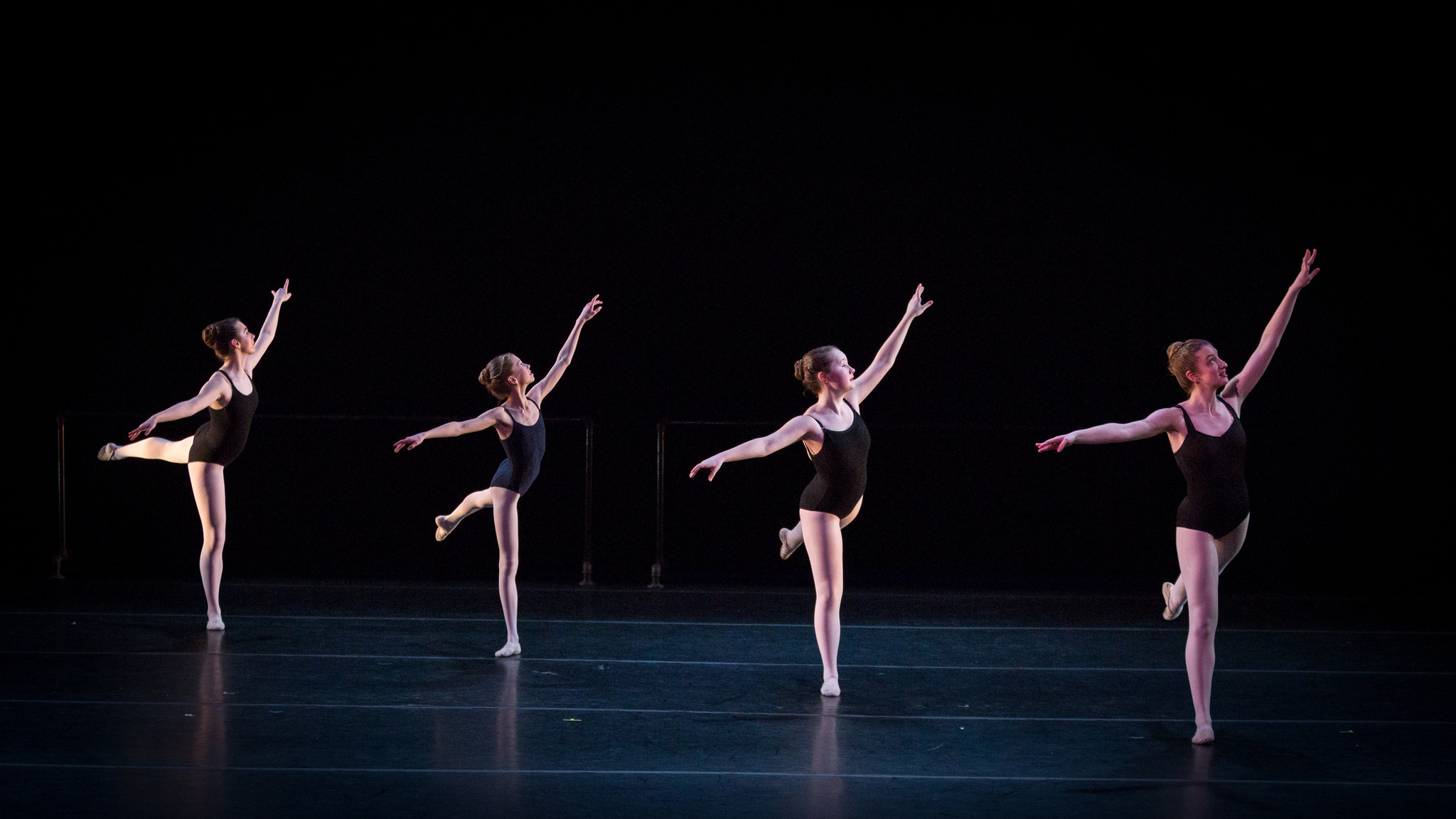
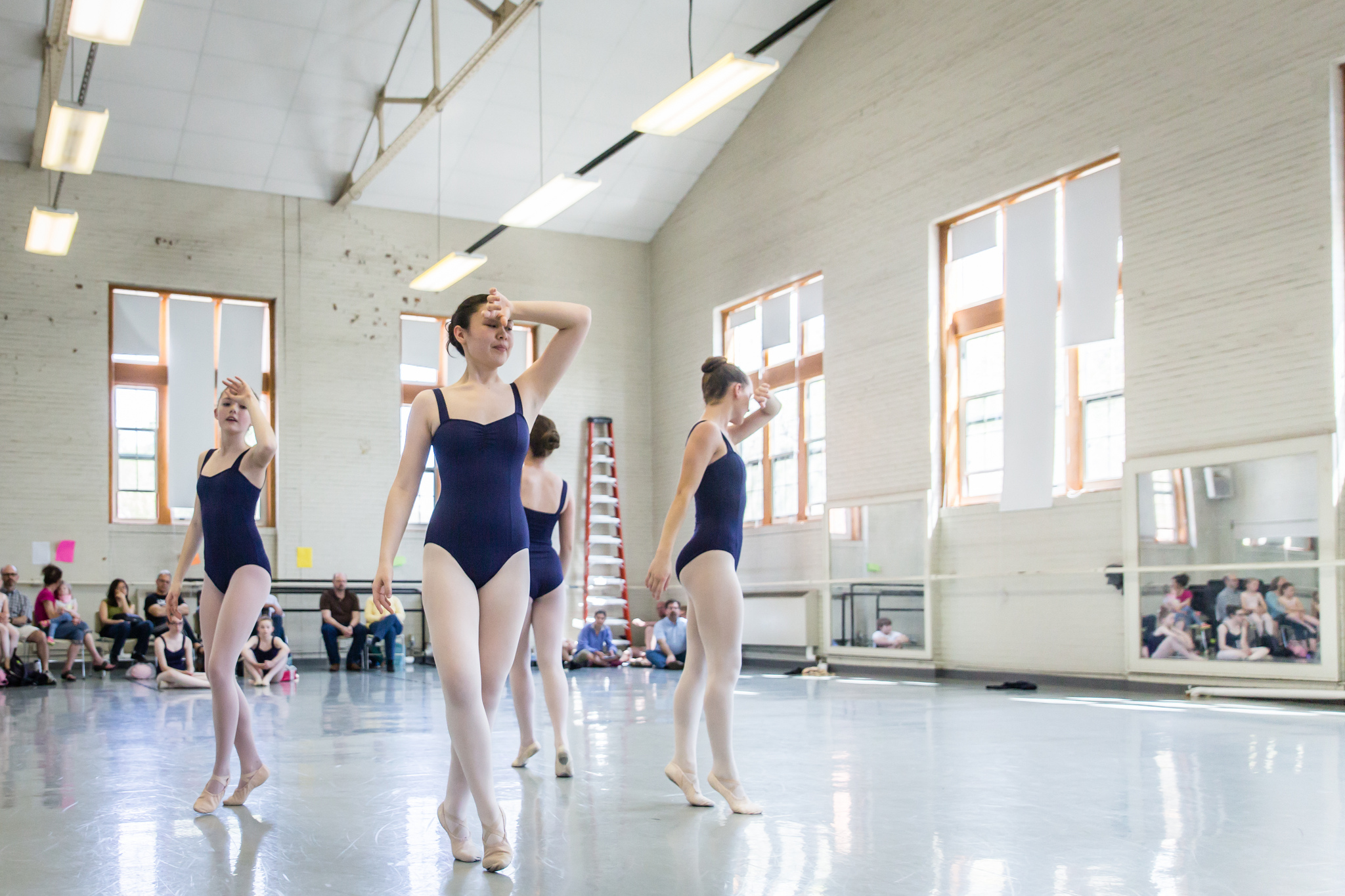
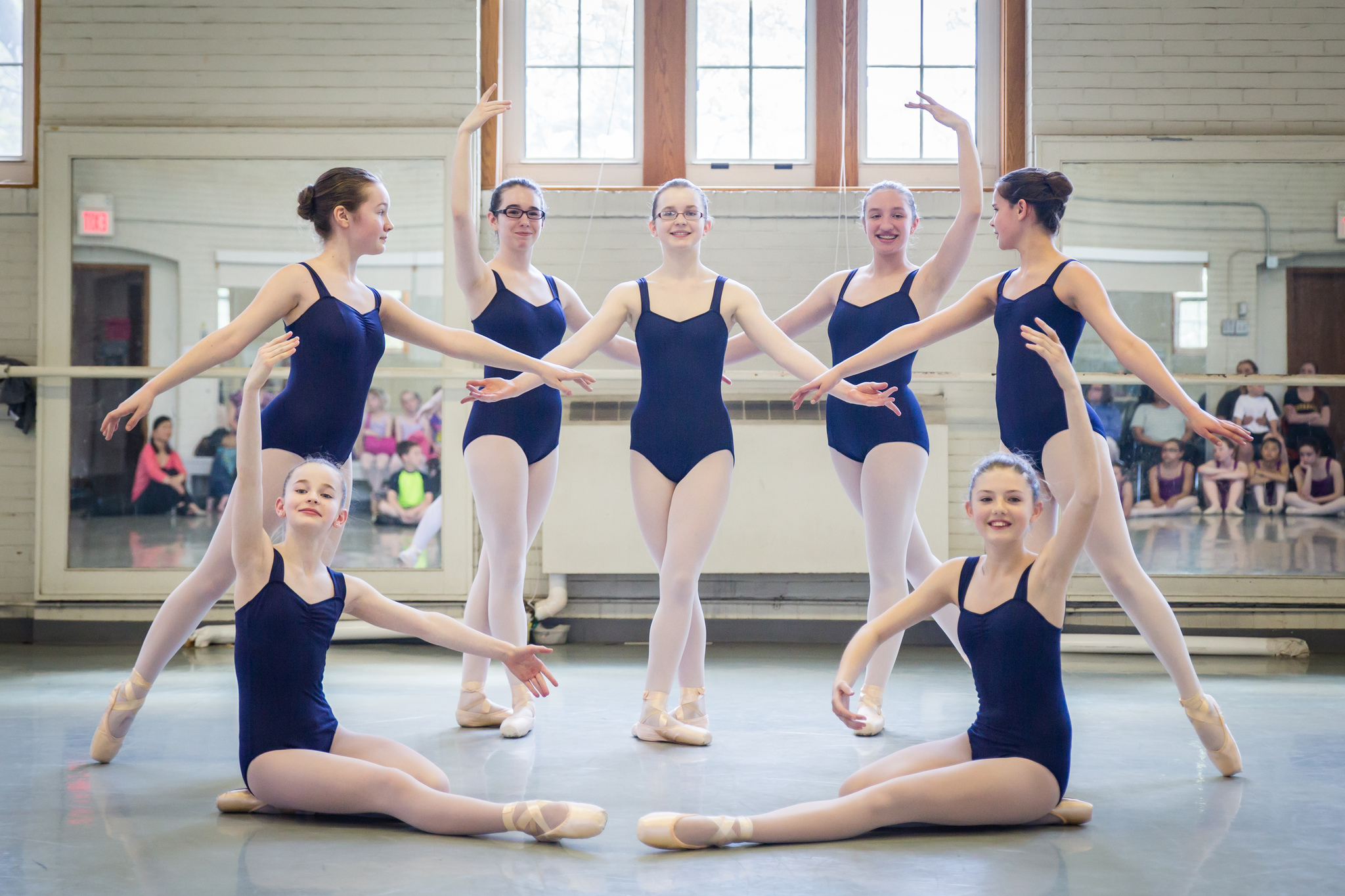
Ballet and modern dance for kids ages 6+. Our curriculum focuses on proper skeletal alignment, functional strength and range of motion, coordination, and musicality.

While minimum age is a prerequisite for starting in Pre-Ballet and Levels 1A and 1B, continued advancement through level 2A and 2B is based on proficiency in addition to age. The primary levels are important and should not be rushed. Students are encouraged to take multiple classes per week to aid their development and progression.
BALLET LEVEL | FALL AGE | SPRING AGE | SUMMER AGE | MODERN DANCE LEVEL ALIGNMENT |
|---|---|---|---|---|
Pre-ballet | 6+ | 6y4mo+ | 6y8mo+ | Modern 1 (Pre-B & Level 1A) |
Level 1A | 7+ | 7y4mo+ | 7y8mo+ | Modern 1 (Pre-B & Level 1A) |
Level 1B | 8+ | 8y4mo+ | 8y8mo+ | Modern 2 (Level 1B-2B) |
Level 2A*** | 9+ years | 9y4mo+ | 9y4mo+ | Modern 2 (Level 1B-2B) |
Level 2B*** | 10+ years | 10y4mo+ | 10y4mo+ | Modern 2 (Level 1B-2B) |
*** Indicates that placement by a staff member is required to enroll. Email dnc-communitydance@uiowa.edu for help finding the right class. | ||||
MODERN DANCE LEVEL | FALL AGE | SPRING AGE | SUMMER AGE | BALLET LEVEL ALIGNMENT |
|---|---|---|---|---|
Modern 1 | 6-7+ | 6y4mo-7y4mo+ | 6y8mo-7y8mo+ | Pre-Ballet, 1A Ballet |
Modern 2 | 8+ | 8y4mo+ | 8y8mo+ | 1B Ballet |
Modern 2 | 9-10+ | 9y4mo -10y4mo+ | 9y8mo-10y8mo+ | 2A Ballet, 2B Ballet |
Multiple Classes
There is no replacement for the benefit that can come from students taking multiple classes per week. At the elementary level, there are many ways to incorporate additional weekly classes into your family's schedule. This table will help you get started, but please reach out to discuss. We're excited to work with you.
| Level | Recommended number of UIYB classes per week | Optional additions |
|---|---|---|
| Pre-Ballet | 1-3 | Modern 1 Pre-Ballet (2nd weekly) Jazz 1 Tap 1 |
| Modern 1 (Pre-Ballet & Level 1A) | 1-3 | Pre-Ballet or Ballet 1A (age dependent) Jazz 1 Tap 1 |
| Ballet 1A | 1-3 | Modern 1 Ballet 1A (2nd weekly) Pre-Ballet Jazz 1 Tap 1 |
| Ballet 1B | 1-3 | Modern 2 Ballet 1B (2nd weekly) Ballet 1A Stretch Jazz 2 Tap 2 |
| Ballet 2A | 2-4 | Modern 2 Ballet 1B Stretch Jazz 2 Tap 2 |
| Ballet 2B | 2-4 | Modern 2 Ballet 2A Stretch Jazz 2 Tap 2 |
| Modern 2 | 2-4 | Ballet 1B (twice weekly) Ballet 2A/2B Stretch Jazz 2 Tap 2 |
Class Descriptions
Pre-Ballet
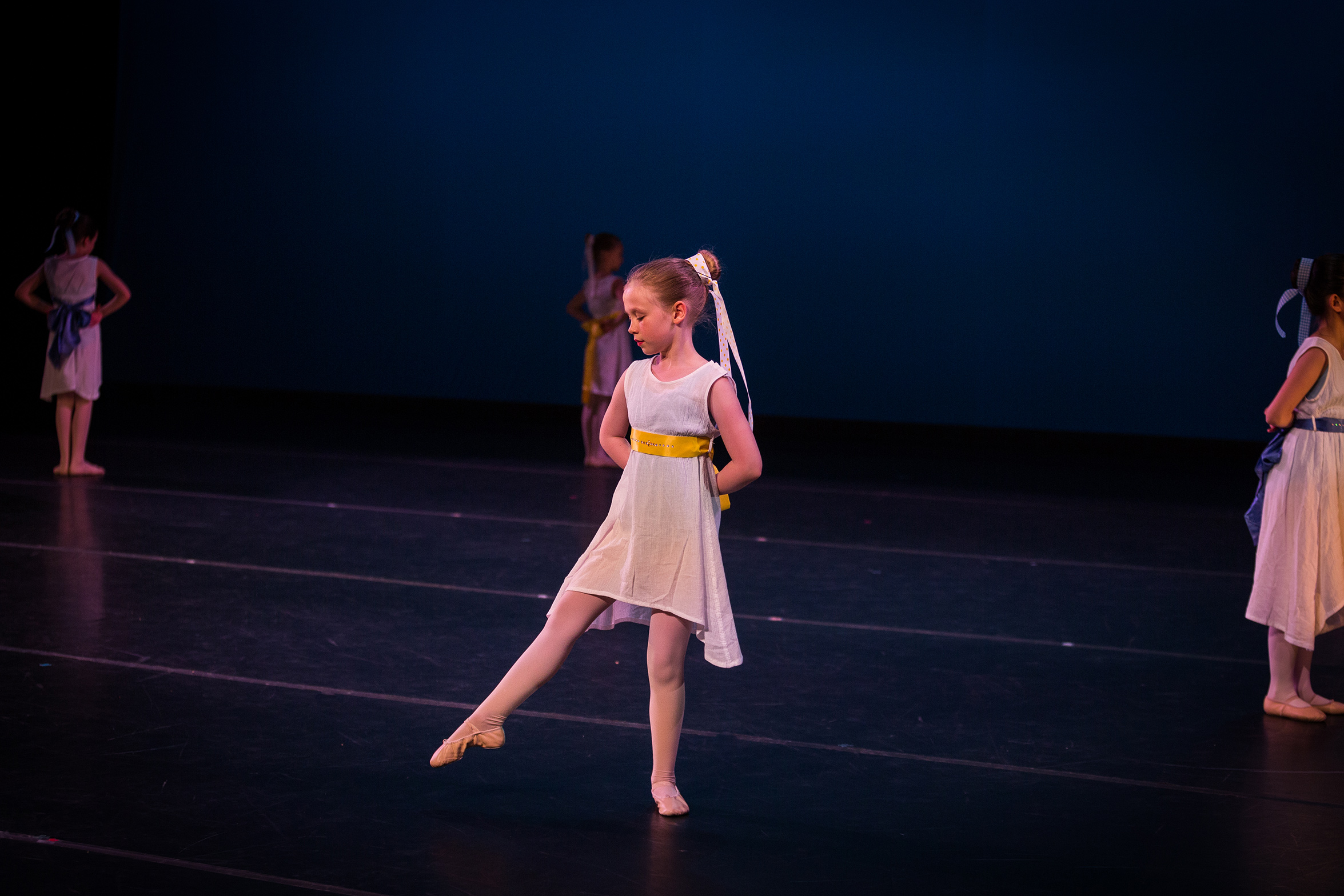
A prelude to formal ballet instruction, students ages 6+ will develop a foundation for ballet technique in a learning environment that fosters a love for dance and music. Students work standing, seated, and traveling across the floor, learning exercises that introduce ballet concepts and ballet class etiquette in a non-competitive atmosphere.
Dancing in pre-ballet builds strength and challenges the vestibular and proprioceptive systems in ways that are age-appropriate. An important part of the developmental process is working barefoot (in convertible tights) so the skin can sense the floor while the child learns. Bare feet are also critical so the teacher can be watching for aspects such as:

- Keeping the toes long when pointing the feet
- Muscular firing in the foot muscles when the dancer stands on one leg
- Arches responsive to rotation of the thigh bones
- Anchoring through the base of the toes—particularly the joint of the great toe
In spring semester each year, part of class will happen in ballet slippers to prepare the students to have their feet safely covered in shoes during the year-end concert.
Pre-ballet meets once weekly. Full-level enrollment consists of both Pre-Ballet classes, Modern 1, Tap 1, and Jazz 1.
Pre-ballet students must be six years old on or before September 1st.
Level 1A
A continuation after a year in pre-ballet. Level 1A is also a great place to start dance class for seven- and seven-and-a-half-year-olds. In this class, dancers learn elements like the fundamental ballet positions, the progression of a standard ballet class, and the French vocabulary that makes up ballet. Level 1A students work stationary in the center of the studio (often standing, sometimes seated), and in pathways traveling across the floor.
Level 1A meets once weekly. Full-level enrollment consists of both Level 1A classes, Modern 1, Tap 1, and Jazz 1.
Level 1A students must be seven years old on or before September 1st.
Level 1B
A continuing level that builds upon Level 1A concepts. This level is designed for second-year ballet students and older children starting their study with the University of Iowa Youth Ballet and Community Dance School.
Level 1B meets once weekly. Full-level enrollment consists of both Level 1B classes, Modern 2, Tap 2, Jazz 2, and a Stretch class.
Level 1B students must be eight years old on or before September 1st.
Level 2A
Students must be able to stay focused for the duration of this 75-minute ballet class. They should set a positive example to others and be able to understand and perform with greater consistency and proper alignment at the barre.
Students at this level benefit from additional dance classes and should dance over the summer to continue progressing.
Level 2A meets twice weekly. Full-level enrollment consists of Level 2A, Modern 2, Tap 2, Jazz 2, and a Stretch Class.
Level 2A students must be nine years old on or before September 1st.
Level 2B
At this level, students are beginning to use port de bras and head movement (epaulement) to refine earlier material. In addition, they incorporate more ballet jumps and center vocabulary.
Students at this level benefit from additional dance classes and should dance over the summer to continue progressing.
Level 2B meets twice weekly. Full-level enrollment consists of Level 2B, Modern 2, Tap 2, Jazz 2, and a Stretch Class.
Level 2B students must be 10 years old on or before September 1st.
Modern 1 (Pre-Ballet & Level 1A)
In Modern 1, children aged 6-7 build on previous experiences in Creative Movement classes to explore creative dance through storytelling, rhythm, and spatial exploration, while deepening their understanding of space, time, and movement quality.
This class is included in full-level enrollment for Pre-Ballet and Level 1A. Can also be enrolled in separately. Students must be six years old on or before September 1st.
Modern 2 (Level 1B-2B)
In Modern 2, 8–10-year-olds take their movement skills to the next level with a deeper focus on how their bodies move and connect. This class introduces key concepts like core/distal awareness—helping dancers understand how to initiate movement from their center and extend it through their limbs—and the head/tail connection, which supports fluidity, balance, and healthy spinal alignment.
As students explore these ideas, they also build essential physical skills like strength, coordination, flexibility, and rhythmic precision. Beyond technique, they gain body awareness, confidence, and expressive tools that support both dance and everyday life.
This class is included in full-level enrollment for levels 1B-2B. Can also be enrolled in separately. Students must be eight years old on or before September 1st.
Stretching (Level 1B-2B)
Students in this class will learn how to do developmentally safe stretches that can also be done at home, full body mobility, and proper bodily alignment.
Stretching is highly beneficial for children learning ballet for several reasons:
- Improves Flexibility
Upper-level ballet technique requires a wide range of motion for movements like splits, arabesques, and high leg extensions. Stretching helps lengthen muscles and improve joint flexibility, making these positions achievable and reducing strain.- Enhances Muscle Control
Stretching increases awareness of muscle engagement and alignment. This is crucial in ballet, where precise control and posture are essential for balance and grace.- Prevents Injuries
Children’s bodies are still developing, and ballet involves repetitive movements and positions that can stress muscles and joints. Stretching improves circulation, and reduces the risk of strains or sprains.- Supports Proper Technique
Many ballet positions require elongated lines and turnout from the hips. Stretching helps achieve these positions safely and correctly, preventing compensations that could lead to bad habits or injury.- Promotes Recovery
After intense practice, stretching helps relax muscles, reduce soreness, and maintain flexibility over time, which is important for consistent progress.

Late Arrival
In levels 2A and 2B, if a student is late and misses the warm-up exercises, they will be asked to observe the class. This is a UI Dance Department policy to avoid injury for students who have missed the initial warm-up.
Want to stay connected with us?
Image Gallery